
Philippines Deploys China-Made Dalian Trains On MRT-3 With Support From Japan’s Sumitomo, Germany’s TÜV Rheinland In Landmark Rail Upgrade: Here’s What You Need To Know Right Now
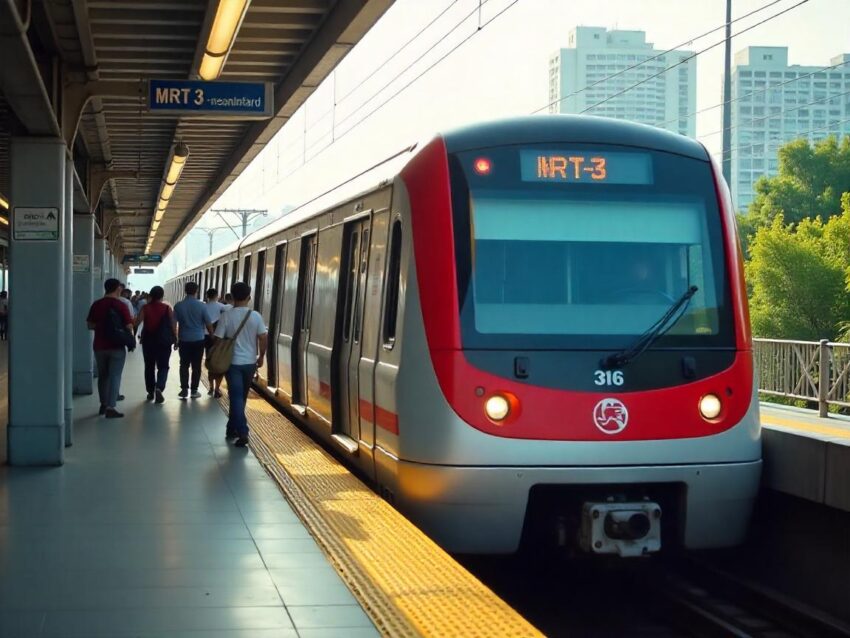
After collecting dust for almost 10 years, the Dalian trains—procured from China in 2014—have finally started operations on the Metro Rail Transit Line 3 (MRT-3), signaling a potential for a faster, inclusive and more up-to-date urban transit system.
It is not only a huge achievement in public transportation infrastructure but also epitomizes the change in thinking on how policies are implemented, how foreign procurement is undertaken and how the economy is managed. As the first of these long-held carriages enter service, the episode has reignited the debate on governance, the value for money and cross-national working.
Transportation And Infrastructure: A Long-Awaited Capacity Boost
The introduction of Dalian light rail vehicles (LRVs) to the MRT-3 line in Metro Manila was long overdue, as the MRT-3 system has a history of congestion. Each Dalian State-of-the-Art Vehicle (SAV) can carry approximately 1,200 passengers, providing a massive boost to the line’s daily ridership. MRT-3, designed to accommodate 350,000 passengers daily, had frequently been overloaded—sometimes hauling over double that amount.
With the deployment of these trains, the Department of Transportation (DOTr) plans to mitigate rush hour commotion by managing train intervals and inspire a modern time of journey. The new trains are intended to increase reliability, decrease waiting times and curb the mechanical issues that have dogged the system for years.
Policy And Procurement: A Tale Of Delayed Action
The Dalian train saga is also a cautionary fable in public procurement. The trains, which were procured for ₱3.76 billion in a 2014 deal between the DOTr and Chinese manufacturer CCRC Dalian, were delivered to the country in 2016 to 2017. Unfortunately, for a variety of compatibility reasons they were left sitting unused. Prime among them were the over-weight of the trains, non-compliance with signaling specifications and the general incompatibility with the MRT-3 system.
It wasn’t until recent years – with the current government – that there was a clear decision to fix these problems. President Ferdinand Marcos Jr. ordered that technical assessments and safety certifications be expedited. Assisted by international auditing firms like TÜV Rheinland, and undergoing maintenance overseen by Japan’s Sumitomo Corp., the rebuilt trains were judged safe for service.
This U-turn demonstrates an increased determination to ensure that the value of government money invested in the ground is maximised. What is more, it is a stark reminder of the need for technical due diligence and independent scrutiny in huge public infrastructure deals.
International And Diplomatic Implications: Re-establishing Trust On Chinese Projects
The restoration of the Dalian trains also has international-relations significance. Chinese participation in Philippine infrastructure, which has been greeted with suspicion in the past, has been mired in controversy, delayed projects, and political friction in the region.
Anyway, with the successful refurbishment and utilization of the Dalian LRVs at no additional expense to the Philippine government, this may indicate a more grown up arrangement between the 2 countries when it comes to public works type cooperation. This development shows that diplomatic engagement, assisted by technical accountability, can still achieve tangible results despite past disagreements.
The result may hype both Philippine officials and Chinese suppliers on institute-building in future contracts, particularly with respect to clarity in technical specifications and what happens after delivery occurs.
Economic And Fiscal Considerations: Salvaging Billions In Idle Assets
Economically, integrating the Dalian trains is more of an exercise in trying to recover public investment that was doing nothing for years. Allowing a ₱3.76 billion asset to rot in depots wasn’t just wasteful, it denied commuters a chance to benefit from this for nearly a decade.
And now with these units finally up-and-running the government will finally start to better recoup its initial investment. More seats mean more revenue for TfL, while less train failures leads to an economic saving of daily delays, missed appointments and lost productivity for passengers.
The bigger fiscal lesson is obvious: having used government assets later than it should have, the value of money can still be repatriated from even dodgy contracts if speculative action is taken at the earliest date possible.
Travel And Tourism: Making The Capital More Navigable
To tourists, particularly to those who are not accustomed to the horrendous traffic in Metro Manila, the “new” MRT-3 experience is a safer way of traipsing the city. Faster, More Frequent Trains, Reduced Overcrowding Travelers will have an easier time getting to major destinations — like museums, shopping, and historic sites — with more trains and less hassle.
There are also newer, air-conditioned coaches with wider doorways and a through gangway layout, which is expected to stem the decline in public transport seen in the capital. For a nation striving to build up a tourism industry, a city-proof mass-transit system is a critical adjunct to airports, hotels and tourist spots.
Conclusion: Back On Track, With A View Forward
But the deployment of the Dalian trains is more than just a technical repair: It is a multi-dimensional story of successful governance and infrastructure recovery, a rare example of success in the country’s ongoing efforts to engage other nations. And as additional units are approved for deployment in the months ahead, commuters and onlookers alike will be looking to see if this long-beleaguered project will ultimately deliver its original promise: to make Philippine public transport safer, faster, smarter.
The post Philippines Deploys China-Made Dalian Trains On MRT-3 With Support From Japan’s Sumitomo, Germany’s TÜV Rheinland In Landmark Rail Upgrade: Here’s What You Need To Know Right Now appeared first on Travel And Tour World.
 English